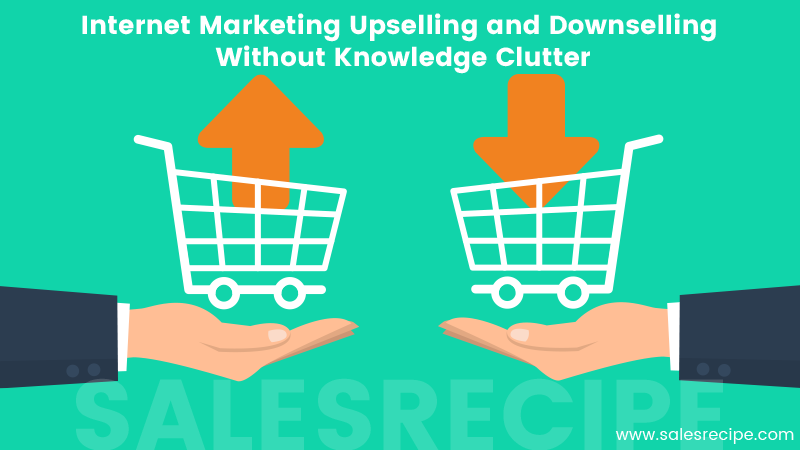
Sometimes, you wish you hadn’t talked about internet marketing upselling and downselling with a professional salesman. You might start a discussion fire that you couldn’t put out. This awkward and cluttered conversation can still end up productive in a certain way. Careful deconstruction is key to achieving this.
Here, I’ll explain to you everything in an easy-to-understand, clutter-free way.
Upselling
The word “up” should make it easy to understand that upselling is to sell a higher-priced product. This is done by introducing it in a less in-your-face manner.
Here’s what I mean:
Salesmen are often accused of pushing forward expensive products that consumers often miss the lower-priced and cost-effective products. In this way, consumers see salespeople as greedy slobs. You don’t want your brand to look like this.
In any case, pushing forward higher-priced products in an in-your-face manner can sometimes work. However, it doesn’t build trust. You want your consumers to trust you while increasing your profit margin.
You’ll want to tell them that for a discounted price they could get a premium product. You can also say that they receive it as a bonus or free deal for purchasing a mid-priced product,
That sounds better to the ears, right?
Upsell as often as you can if you want to boost your profit. Always mention the benefits of the product included in your upsell. Miss that, and you may miss an opportunity to break your profit limit. Make sure your site loads effectively too especially if you’re an e-commerce site!
Downselling
Now, if you have a customer who is asking you about your product or service and they suddenly decide to back out for some reason (should they assume you as a greedy slob or such with your approach, just kidding), you’re going to have to downsell.
When should you downsell?
1. The Consumer Fears The Price
Remember, consumers work on a budget. If they see a high-priced item out of their price range, they’ll flee instantly. From here, you’ll understand why some retailers use payment plans to help calm down consumers. They would consider purchasing the product because of the easier way to pay. This is downselling.
2. The Consumer Wants To Do Further Research
To downsell at this point is a bit tricky, but still manageable. Consumers who do research want to see reviews about your products. They want to read actual consumer feedback. Consumers want to know more about the technicalities of your product. This helps them compare prices and data with other providers. Their newfound knowledge about your products and services allows them to make an informed decision.
Downselling at this point would mean that you can use an alibi about a high-performing product should it be deemed less competitive with other products. An alibi including an admission creates trust, paving the way for downselling another product with reliable results.
To downsell effectively with an informed customer, you must also measure the popularity and reviews about your products and services to assess if the products or services you put forward after the initial product-of-interest has a higher rate of success.
The Upsell/Downsell Chain
Now that you understand what upselling and downselling means, it’s time to move on to an upselling/downselling chain.
I know you’ve played videogames, especially those fighting-games where you string combos against your opponents. If not then, just think of dominos falling on each other.
Now, TV infomercials have used this countless of times to gain more profit.
You’re probably familiar with the phrase “But wait, there’s more!”
But then, that’s just an upsell, right?
Now that Internet marketing is one of the biggest things to happen to salespeople in creating attention and profit for their products, creating an upsell/downsell chain is essential to your success.
This is one example of an upsell/downsell chain:
If the consumer accepts an offer, your website will show a “wait, there’s more!” sequence once they closely approach the finish line of filling out your order form. This is where you could upsell another product with a discount or a freebie.
Should they decline from the initial upsell offer, a downselling “if you accept the offer for *discounted upsold product name* today, you get a *reward that could be used next time you buy something*” form would appear.
If they accept that downsell offer, you can subtly upsell some other products in different ways.
For example, you could highlight that this certain service goes well with the product and if ordered today could get a free two-month trial period.
The reward must be something meaningful and affordable because you are downselling it. It can be a gift certificate to another partner merchant you have. Your product can have an added insurance clause. It could be anything as long as it’s useful.
One Click Upsells
For most modern sales websites, a one-click upsell is a miracle-worker.
One-click means it does not inconvenience your consumer by filling out additional information. It just means they start taking out products and you start charging their cards automatically.
This method is useful if you combine them with an efficient upsell/downsell chain in your forms.
Some platforms that are easy to use come from InfusionSoft.com and Cydec.com.
Here’s how to start on your own one-click funnels today.
Conclusion
There you have it, a good way to understand upselling, downselling, Internet-based upselling/downselling chains for your website and even making things simpler with one-click upsell platforms that help you create pages to redirect consumers in increasing their spending.