You might view your company as that “friendly neighborhood service” that your former clients recommend to their peers if they need help. However, depending on just word-of-mouth marketing, print, and TV ads won’t give you the results that can improve your revenues.
It’s time to have your online presence prominent online. A website is enough to help you assert your place in cyberspace, but making it visible to audiences interested about you is a different story.
Here’s a breakdown of the potential customer journey:
- Audiences will use a search engine such as Google, Bing, Yahoo, etc.
- They can also use social media
- Readers will type in specific keywords or key phrases to find you
- If you’re not relevant in these aspects, your site is likely invisible
To make yourself relevant to these keywords and key phrases will mean your site’s entirety must be adjusted accordingly. You msut work on improving your content, videos, images, and other informative medium. Search engine optimization (SEO) is not rocket science. However, it is not so simple either.
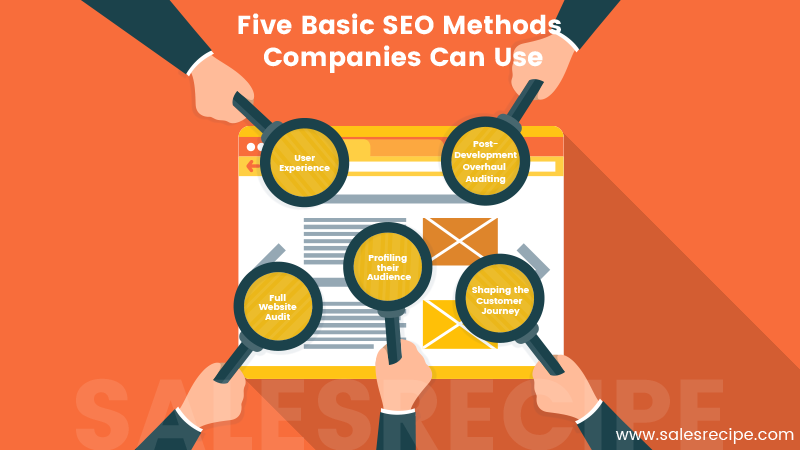
Full Website Audit
To audit is to take full account of every detail. Site auditing is similar to fiscal accounting. It is important to consider every detail of your website. Companies about to start their very first website can audit their competition’s site as their starting point. It is true that imitation is the sincerest form of flattery, but it is also the best way to create a web design with excellent user experience and content that works to your benefit.
Begin a full site audit by doing the following:
- Ensuring the site is “Crawlable” (you have a robots.txt file and there are no restrictions against search engine bots on all your pages).
- Page loading speed
- Asset sizes (in megabytes, etc.)
- On-page optimization (keyword count, 1-2 paragraphs, and content’s ease to read)
- Search Engine Cache Dates (special tools allow you to do this. The more search engines cache your site, the more it means your page is of great value)
Assessing all these areas allows you to see the competitor site’s technical and qualitative aspects. The birds-eye-view helps identify which areas to improve and adjust to your benefit. Page loading speeds, for example, can improve conversion rates for your site.
Profiling their Audience
When you were planning your business, your team checked the demographics of your target market. You collected information about income, job security, their properties, the services they used often, etc. It allowed you to know who your average customer is.
You might say that audience profiling is beyond SEO. However, it plays a huge role in developing the site’s content and user experience. If you knew your business’ market were individuals who were 60 years of age and above, then you will never use Millennial phrases in your site’s content and introduce abundant information per page. Companies like yours could use simpler sentences for copy. You can even consider making sure your site’s user experience is better on mobile for the ease of your septuagenarian audience.
A survey both online and offline helps you profile your audience better. The best way to do this is to offer a free gift (that is of great value, such as a free product or service voucher) to your audiences to have them spend at least ten minutes to answer the queries.
You can also conduct experiments in social media. Create a page and run a paid advertisement of the best product or service your business can offer. Observe all responses from each territory you survey. The information you receive can help you create your ideal customers.
Shaping the Customer Journey
Truthfully, there are many aspects to check before launching or overhauling your company’s website. After auditing and profiling your audience, the customer’s journey in your website is the next step. If your business has been in the industry for quite some time, then by now, you probably know that grid-based web designs are inefficient nowadays. These are known as the “Web 1.0” sites.
The new look of the Internet is purely visual and works together with text. The latter acts a means to instruct or inspire action (known as a call-to-action message). New landing pages are mean to inspire curiosity. They are carefully constructed to achieve results.
These are also the starting points of the customer’s story in your map of their journey. Identify the actions your visitors will take, which links they are likely to click after reading the content on their website, and what you can do to influence their choices that will work to the benefit of your business.
User Experience
A customer with a positive experience using your business is likely to recommend you to other clients. This feeling can be derived from the smallest things such as navigating your website. It might seem trivial to design your website to have smooth navigation, easy-to-read content, and proper visual hierarchy, but as a matter of fact, they contribute to a positive visitor experience.
Remember, your website is your online beacon. It can introduce a wonderful experience for your audiences in simple ways. These include animated landing pages, tastefully-designed banners, and others. A well-designed website leaves a mark on them and makes your business brand memorable.
User experience is measured through A/B tests and surveys. Here, you can pay a select number of audiences selected through demographics near to your ideal customer. Moreover, analytic information from online SEO tools allow you to know more about the technical side of all your site’s pages. These areas include page loading speed, blank pages, and others.
Post-Development/Overhaul Auditing
It takes three months at most to evaluate a website’s overall performance post-development or overhaul correctly. On this part, analytic tools can help you measure the overall technical and back-end performance of your site.
As for the qualitative aspect, you can collect information using the methods stated in the first section of this post. Compare the information you started with the data you currently have. Check the areas where your site fails and succeed. It is vital to reinforce them by making small adjustments (and the efficacy of these alterations will need just a few weeks to see if they work).
In addition to the sections you audited before building or renovating the site are these areas:
- HTTP server response codes (to help with crawlability; helps with bad redirects)
- Efficacy of custom 404 page (which will show links to the best content on your site if the page is unavailable)
- Site Encoding (HTML/PHP code optimization for faster site loading and function)
Wrapping Up
This guide is can help you know the starting points to optimize your existing site. If you follow these guidelines, youguarantee that your first-time website is up and ready to contend against your competitors.
Again, the Internet is the new mainstream media. A well-designed website that has excellent navigation and optimized for search engines guarantees your better foothold when competing against other businesses. However, the basics are not enough to guarantee your success. If you need help on specific SEO aspects, you can always use our services!